The Directors on LBB: Reagen Butler
Director Profiles
Reagen's work blends cinematic craft with intimate, human insight.
With a background in still photography, he gravitates toward simple, human stories that create emotional impact through authenticity and restraint.His work has been recognised at ONE Asia Creative Awards, Best Design Awards, Axis Awards and the NZ Cinematography Awards for brands including Whānau Ora, Spark, and the World Health Organisation.
Reagen sat down with LBB to discuss the rising trend of humanity, observation and simplicity within advertising as well as the creative advantages of coming from a photographic background.
“The opportunity is always to look into the core idea… the humanity and the truth.”
LBB: What excites you in the advertising industry right now, as a director? Any trends or changes that open new opportunities?
Reagen:
Ideas, budgets, techniques, and trends come and go -- the opportunities are always to look past these things and into the core ideas, the humanity, and the truth and work to tell the most authentic version of that. I think that’s the opportunity at the moment; a trend towards humanity, observation, and simplicity -- these key ideas, when written correctly, don’t need huge budgets or massive teams. Intelligent, restrained creativity feels like both the larger opportunity as well as an exciting place for my style and ideas to play in. Coming from a photographic background, I feel innately aligned to the simplicity of these scripts and am uniquely placed to operate in this ever changing industry.
LBB: What elements of a script sets one apart from the other and what sort of scripts get you excited to shoot them? How do you approach creating a treatment for a spot?
Reagen:
Look, any script that lands in my inbox is a good script and similarly any opportunity to treat is one worth taking. Going through that process of break down, build up and resolution internally is the part that I love. I’m always most excited about a script that is trying to say, accomplish, or paint a single idea -- these opportunities always have the most potential for cold blooded, single minded direction, and decision, and that’s always something I will jump at.
LBB: What elements of a script sets one apart from the other and what sort of scripts get you excited to shoot them?
Sam:
One crucial thing that separates scripts for me is the creative team behind them. I find it much easier to get excited about a script if the people who developed it are also pumped about it. This will often lead to a much more collaborative experience, where no idea is a bad idea and you work together to elevate the script as much as possible - both from a story and a technical standpoint. At the end of the day, I want to get as much out of every opportunity I get, so having an agency team that is open-minded and enthusiastic makes the whole experience much more enjoyable.
LBB: Your work often feels cinematic yet intimate. How do you approach framing and camera movement to maintain that balance?
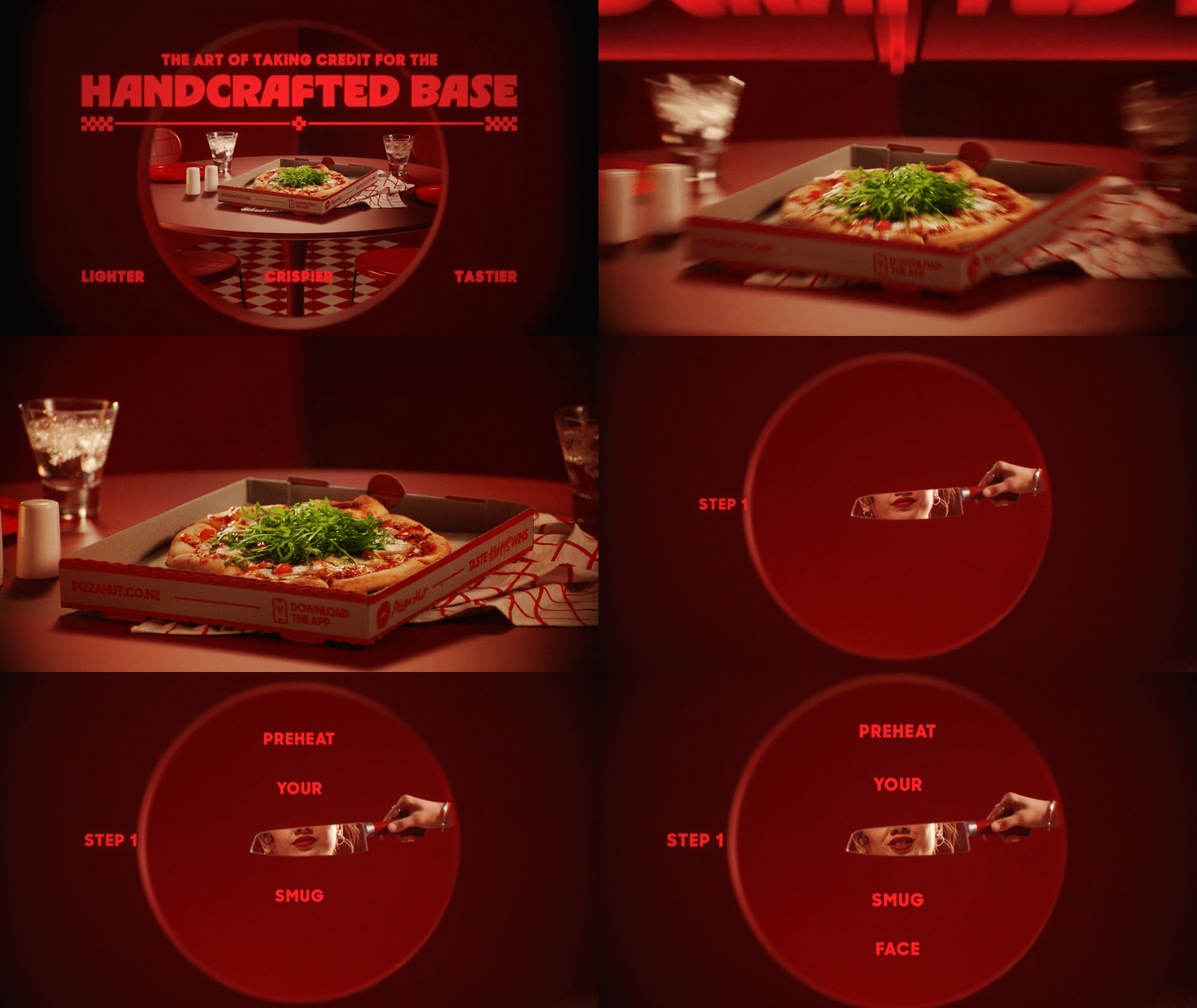
Reagen:
Less is more. Almost always. Find where the camera needs to be to give the correct sense of the moment and don’t move it unless required for the story. You can do a lot with just height, depth, or even a lens change to imply more than enough in any given shot.
On top of that, my background as a photographer has always been cinematically focussed -- even very early on in my career as a photographer I was always drawn to far side key lighting, different lensing, and making the most out of a single frame -- I try to carry this through where appropriate as a director.
Not to mention of course, the DOPs I’ve been lucky enough to work with bring their own thing, their own cinematic fingerprint -- I think having a really deep understanding of their language, and even the technical sides of cameras better positions me to create beautiful images.
LBB: When you first read a script, what are you instinctively drawn to — the emotional spine, the rhythm of the dialogue, or the visual world it suggests?
Reagen:
I’m always drawn to the characters, first and foremost. How can I relate to them, who do I know that is like them -- what are their stories and what really makes them tick.
This can sound a bit much when it comes to commercials but I believe that having an underpinning character who might develop, even just a tiny bit through the work is the most important.
Read more of the interview over on Little Black Book.